Australia remains one of the biggest study destinations for Indian students, and almost everyone goes on the same visa: the Student visa (subclass 500). The rules have changed several times since 2024, so this guide puts the current numbers in one place - the fee, the funds you must show, the English score, the Genuine Student questions and your work rights. Every figure below is from official Australian government pages, checked on 14 November 2026.
What the subclass 500 visa gives you
With a Student visa you can study an eligible course with an Australian education provider, stay in Australia in line with your enrolment (up to 6 years), and travel in and out of the country while the visa is valid. It covers higher education, vocational courses (VET), pathway and foundation programs, English courses (ELICOS), school programs and postgraduate research. Before you apply, you enrol in a course and receive a Confirmation of Enrolment (CoE) from your provider - and that CoE must still be valid when the Department of Home Affairs decides your application.
The visa fee: AUD 2,500
The base application charge for the main applicant is AUD 2,500 for applications lodged on or after 1 July 2026 (it was AUD 2,000 before that, and AUD 1,600 before July 2025). Indian passport holders pay the full charge for regular courses - the nationality concessions apply only to ASEAN, Pacific Island and Timor-Leste passport holders. Separately, students applying for independent ELICOS or non-award courses are exempt from the increase regardless of nationality, and continue to pay the previous charge plus a small annual CPI adjustment. Additional charges apply if you include family members in your application. The fee that applies is the one in force on the date Home Affairs receives your application, so check the current figure on the day you lodge.
Proof of funds: AUD 29,710 plus tuition and travel
You must show you have enough money to cover travel costs, 12 months of living costs and your tuition fees (plus school costs for any school-aged children travelling with you). For applications lodged on or after 10 May 2024, the 12-month living cost figure is set at AUD 29,710 for an individual student, with higher amounts if a partner or child accompanies you.
There is an alternative: instead of showing the funds, you can show evidence that your spouse or parents will support you and meet a minimum annual income threshold. Either way, the money must be genuinely available to you - unexplained recent deposits are one of the most common reasons applications fall over at this step.
English: IELTS 6.0 or equivalent
Since 23 March 2024, the minimum English test score for a Student visa is IELTS 6.0 (or equivalent), up from 5.5. Lower scores are accepted only in specific packaged routes: IELTS 5.0 if you package at least 20 weeks of an English course (ELICOS) before your main course, 5.5 with at least 10 weeks of ELICOS, and 5.5 for recognised foundation or pathway programs. The test must generally have been taken within 2 years of your application.
Not everyone has to show a test score. Citizens of the UK, USA, Canada, New Zealand and Ireland are exempt, and so are students enrolled only in an ELICOS, school or postgraduate research course, secondary exchange students, and Foreign Affairs or Defence sponsored students. The list of accepted tests was updated on 7 August 2025 - it now includes IELTS, PTE Academic, TOEFL iBT, C1 Advanced, OET, CELPIP General, LANGUAGECERT Academic and MET taken at a secure test centre (online at-home tests are not accepted) - so check the Home Affairs English language page for the current list before booking your test.
The Genuine Student (GS) requirement
Since 23 March 2024 the old GTE statement has been replaced by the Genuine Student (GS) requirement. Inside the online application form you answer targeted questions - about your current circumstances and ties to home, why you chose this course and this provider, how the course will benefit you, and anything else relevant. Each answer is capped at 150 words and must be in English.
Two things matter here. First, Home Affairs says it gives more weight to statements supported by evidence, so attach documents that back up what you write - transcripts, employment letters, financial records. Second, planning to seek permanent residence after your studies does not count against you under GS, as long as studying genuinely is the primary reason for the visa.
Health cover (OSHC)
You must hold Overseas Student Health Cover (OSHC) for yourself and any family members coming with you, arranged from at least a week before your course starts and for the duration of your stay. You enter the insurer's name and policy dates in the application form - keep the policy certificate handy when you apply.
Work rights: 48 hours a fortnight
Once your course has started, you can work up to 48 hours per fortnight while your course is in session, and unlimited hours during scheduled course breaks. If you are studying a master's degree by research or a PhD, there is no limit on hours once your course has started. You cannot work before your course begins unless the visa you held when applying allowed it. You must also stay enrolled and maintain satisfactory attendance and course progress - falling behind on these can put the visa itself at risk. Your exact conditions are on your grant letter and in VEVO - check there before starting any job.
Applying from India
Applications are lodged online through ImmiAccount. If you are outside Australia you can apply for a Student visa as normal - just allow enough processing time before your course starts. Note that rules changed on 2 October 2026 for people applying from inside Australia: who can apply onshore, and which family members can be included, is now more restricted, so if you are planning to switch visas within Australia, read the current rules first.
Home Affairs processes complete, "decision ready" applications faster: correct name and date of birth exactly as in your passport, a valid CoE uploaded, English evidence included, documents translated into English, and quick responses to any requests in your ImmiAccount. Check the current processing times on the Home Affairs website before fixing your travel date.
Sources
- Department of Home Affairs - Student visa (subclass 500), including the Genuine Student requirement and evidence list: immi.homeaffairs.gov.au/visas/getting-a-visa/visa-listing/student-500
- Study Australia (Australian Government) - Student visa subclass 500: stay up to 6 years, 48-hour work limit, CoE and the 2 October 2026 onshore application changes: studyaustralia.gov.au/en/plan-your-move/your-guide-to-visas/student-visa-subclass-500
- Study Australia - 2024 student visa changes: AUD 29,710 financial capacity requirement from 10 May 2024, GS requirement and new English scores: studyaustralia.gov.au/en_in/tools-and-resources/news/student-and-temporary-graduate-visa-changes--2024
- Study Australia - English language requirement changes (IELTS 5.5 to 6.0 for student visas from 23 March 2024): studyaustralia.gov.au/en_in/tools-and-resources/news/english-language-requirements-changes, and Home Affairs - current accepted English tests (updated 7 August 2025): immi.homeaffairs.gov.au/help-support/meeting-our-requirements/english-language
- Department of Home Affairs - Work restrictions for student visa holders (48 hours per fortnight while in session): immi.homeaffairs.gov.au - work restrictions for student visa holders
- Study Australia - Student Visa Application Charge increase (Student VAC from AUD 2,000 to AUD 2,500 from 1 July 2026, with concession groups listed): studyaustralia.gov.au - Student Visa Application Charge increase
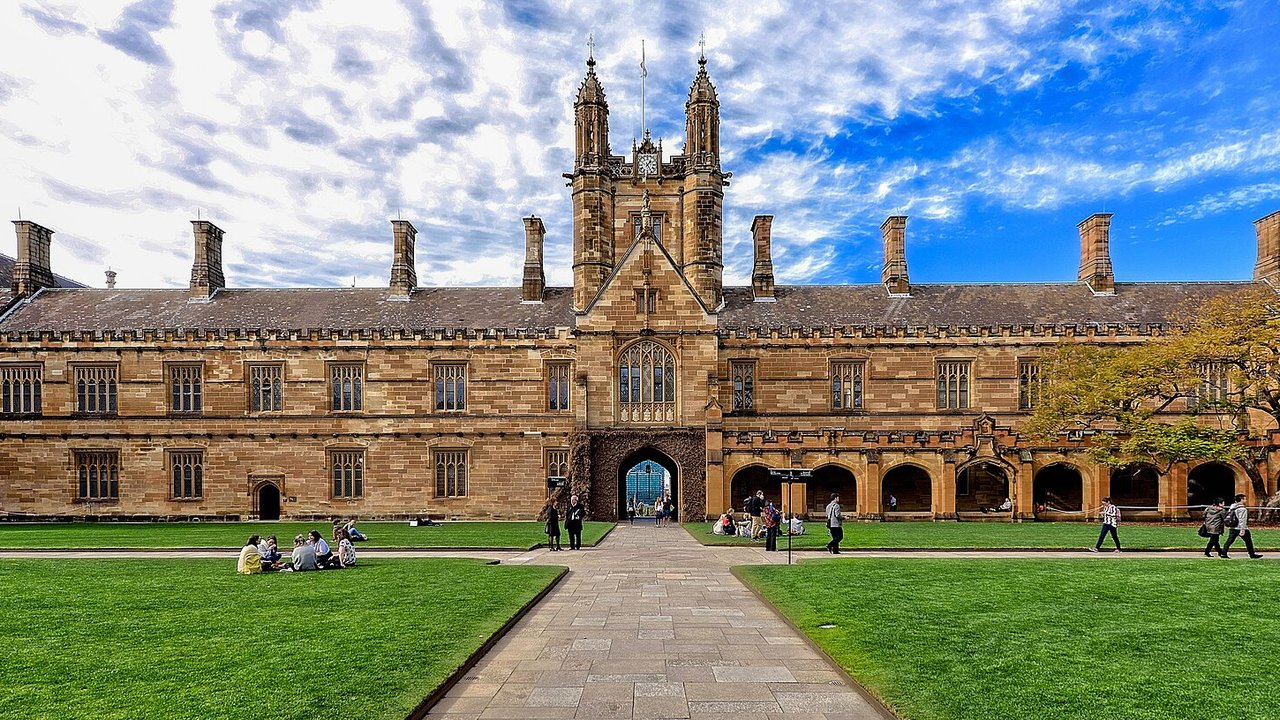
Image: "Main Quadrangle, University of Sydney" by Jason Tong, CC BY 2.0, via Wikimedia Commons. Cropped to fit.
#AustraliaStudentVisa #Subclass500 #StudyInAustralia #StudentVisaAustralia #LoyalInstituteForEducation #Ambala