Not all professions are equal in the eyes of immigration systems. Countries competing for workers give some careers dedicated visa routes, lower salary bars or a direct path to residence - and if your profession is on one of these priority lists, your planning should start there. Here is what the official sources say right now, country by country, with links at the bottom checked on the day this post was published.
Canada: ten priority categories in Express Entry
Canada runs category-based selection rounds inside Express Entry: instead of inviting only the highest overall scores, IRCC invites candidates who qualify for a specific category set by the Minister, ranked by their CRS score within that category. The current categories are:
- French-language proficiency
- Healthcare and social services occupations
- Science, technology, engineering and math (STEM) occupations
- Trade occupations
- Education occupations
- Transport occupations
- Physicians, senior managers, and researchers with Canadian work experience, plus skilled military recruits
If your occupation sits in one of these categories, you compete in a smaller, targeted pool. For students, pairing a category occupation with Canadian study and a post-graduation work permit is the classic combination - see our post on Canada PGWP and PR pathways.
United Kingdom: a dedicated visa for health and care professionals
The UK runs a whole separate sponsored route for medical work: the Health and Care Worker visa. It is for qualified doctors, nurses, health professionals and adult social care professionals with a job offer from the NHS, an NHS supplier or an adult social care employer approved by the Home Office. You still need a certificate of sponsorship, a minimum salary that depends on the job, and proven English - but the route exists precisely because these professions are in demand. Other professions use the general Skilled Worker route, whose 2026 salary and skill bars we covered yesterday. For the study-first path, see our Study in UK page.
Germany: a lower Blue Card salary bar in shortage occupations
Germany's EU Blue Card normally requires a job matching your degree with a gross salary of at least €50,700 per year (2026 figure). For shortage occupations, that bar drops to €45,934.20 with Federal Employment Agency approval - and the same lower bar applies to new entrants whose degree is less than three years old, in any profession. Germany's shortage occupation list includes:
- Medical doctors, dentists, veterinarians and pharmacists
- Academic and comparable nursing and midwifery professionals
- Academic STEM professionals, and architects, spatial and transport planners
- ICT service managers and other professional services managers
- School and out-of-school teachers and educators
No job offer yet? Germany's points-based Opportunity Card lets you search on the ground first.
New Zealand: the Green List - residence now or after two years
New Zealand keeps a Green List of roles it needs workers for, split into two tiers. If your role is Tier 1 and you meet its qualification, registration or experience requirements, you can apply for a Straight to Residence Visa - residence immediately. Tier 2 roles lead to a Work to Residence Visa after two years of working in New Zealand. Each listed role carries its own exact requirements, so the check is always: is my specific role on the current list, and do I meet what it asks?
Australia: sponsorship follows the Core Skills Occupation List
For employer sponsorship, Australia's Skills in Demand visa (subclass 482) Core Skills stream is built around the Core Skills Occupation List - the occupations the government has specified in law under the Migration Regulations. If your occupation is listed, an approved employer can nominate you, subject to the income threshold (indexed every 1 July - we covered the 2026 threshold in yesterday's work visa trends post). If it is not listed, this stream is simply not open for that role, which makes the list the first thing to check.
How to use this when planning your move
- Check your exact occupation, not your job title. Every country matches applications to official occupation codes and lists that change - verify yours on the current list.
- A listed profession is a head start, not a shortcut. Salary thresholds, registration, employer approval and English still apply on top.
- Healthcare has the widest dedicated lanes. The UK, Canada, Germany and New Zealand all give medical and care professions special treatment right now.
- French is a category of its own in Canada. Strong French can matter as much as your occupation in Express Entry.
- Look beyond the big destinations. Employer-sponsored routes in Slovakia, Slovenia and Dubai (UAE) follow their own demand lists and can fit different profiles.
- Confirm on the official page the day you act. Lists and thresholds change; the sources below publish the current position.
This post is for general information. It is checked against the official sources below on 5 November 2026, but immigration rules change - always confirm the current requirements on the official sources, and consider advice from a licensed immigration consultant or lawyer for your specific case, before you apply.
Official sources
- IRCC - Express Entry category-based selection (current categories and how rounds work): canada.ca
- GOV.UK - Health and Care Worker visa (eligible roles and requirements): gov.uk
- Make it in Germany (Federal Government portal) - EU Blue Card (2026 salary thresholds, shortage occupations, new-entrant rule): make-it-in-germany.com
- Immigration New Zealand - Green List roles (Tier 1 Straight to Residence, Tier 2 Work to Residence): immigration.govt.nz
- Federal Register of Legislation - Migration (Specification of Occupations - Subclass 482 Visa) Instrument 2024 (Core Skills Occupation List): legislation.gov.au
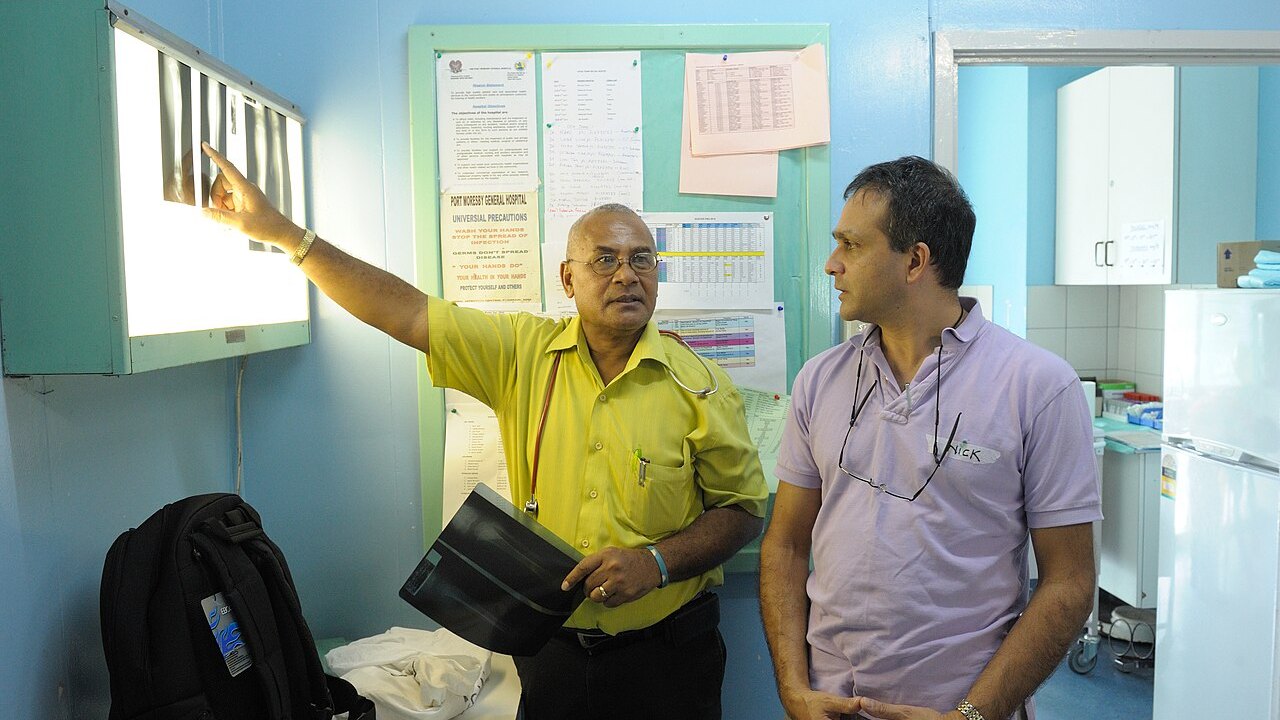
Image: "Operation Open Heart doctors" by Rocky Roe/AusAID, CC BY 2.0, via Wikimedia Commons.
#HighDemandJobs #WorkVisa #HealthAndCareVisa #EUBlueCard #GreenListNZ #ExpressEntry #WorkAbroad #LoyalInstituteForEducation #Ambala