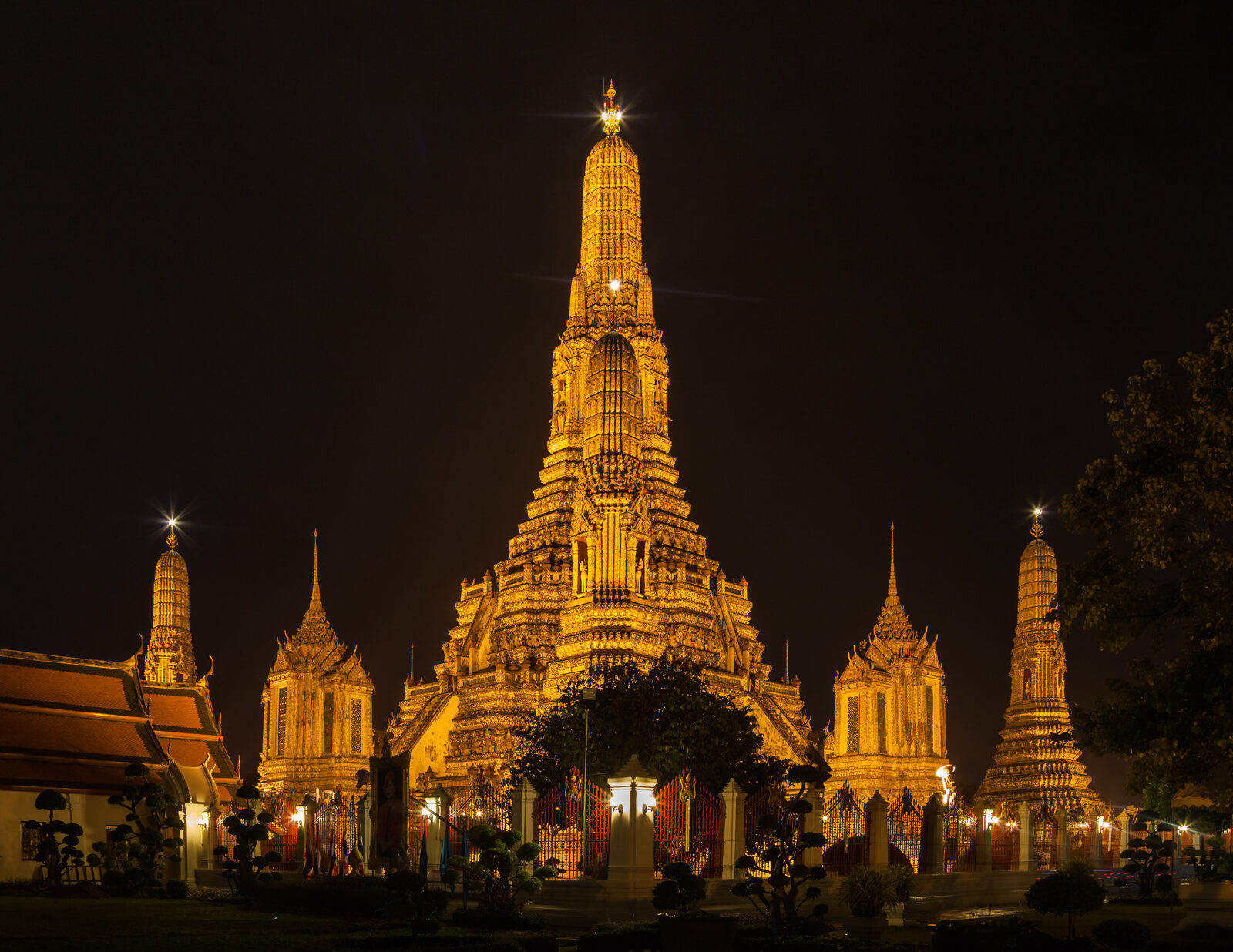
Beaches in Phuket and Krabi, Bangkok's temples and street food, quick direct flights from most Indian cities - Thailand is the classic first international trip for Indians. The entry rules changed on 15 September 2026: the 60-day visa exemption Indians had been using was reduced to 30 days, and Visa on Arrival no longer covers Indian passports. This guide puts the current rules in one place, with every figure from the Royal Thai Embassy in New Delhi, the Thai Ministry of Foreign Affairs and the Immigration Bureau, checked on 25 November 2026.
The entry rules in one view
For a holiday of up to 30 days you need no visa at all: the 30-day visa exemption covers Indian ordinary passport holders travelling for tourism, free of charge, from 15 September 2026 "until further announcement", in the words of the Royal Thai Embassy in New Delhi. For anything longer, you apply online for a Tourist Visa (TR) before you fly. One more task applies to every trip: the free Thailand Digital Arrival Card (TDAC), submitted online within three days before arrival.
| Entering Thailand as a tourist | Current rule (checked 25 November 2026) |
|---|---|
| Visa for stays up to 30 days | Not needed - 30-day visa exemption for Indian ordinary passport holders, tourism only, free of charge, effective 15 September 2026 until further announcement |
| Visa on Arrival | No longer available to Indians since 15 September 2026 - only Azerbaijan, Belarus and Serbia remain eligible |
| Staying longer than 30 days | Tourist Visa (TR) via the e-Visa portal, up to 60 days - INR 3,000 single entry or INR 13,500 multiple entry |
| Arrival form | Thailand Digital Arrival Card (TDAC) - free, mandatory for every arrival by air, land or sea, submitted within 3 days (72 hours) before arrival |
| Funds to carry | Official guidance cites between 10,000 and 20,000 Baht per person (20,000-40,000 per family) in cash or equivalent - carry the higher figure |
| Onward travel | Proof of a confirmed ticket out of Thailand within 30 days of arrival |
| Passport | At least 6 months' validity on arrival |
| Extension in Thailand | 1,900 Baht at the Immigration Bureau - for Indian nationals the tourism extension granted is not longer than 7 days |
What changed on 15 September 2026
Thailand's Cabinet approved a review of the country's visa measures on 19 May 2026, published in the Royal Gazette on 31 August 2026 and effective from 15 September 2026. Under the revision, each country now gets one visa exemption scheme: the 30-day exemption was expanded to 60 countries and territories, including India, while the Visa on Arrival scheme was cut to just three countries - Azerbaijan, Belarus and Serbia. Indians were on the VoA list before the revision, which is why older guides still mention it; today it is not an option. The Royal Thai Embassy in New Delhi confirms the 30-day exemption applies to Indian ordinary passport holders for tourism purposes only and "remains effective from 15 September 2026 until further announcement." Thailand had previously allowed Indians 60 visa-free days, so trips planned around a five- or six-week stay now need a visa.
The 30-day exemption: conditions that matter
The exemption is simple, but it comes with conditions that immigration officers can and do check at the counter:
- Tourism only. The exemption does not cover work, business meetings on behalf of a Thai company or long stays. Taking up work breaches your entry conditions and can get your stay permit revoked.
- Onward ticket within 30 days. Royal Thai Embassy guidance states exemption travellers must show proof of onward travel - a confirmed air, train, bus or boat ticket - to leave Thailand within 30 days of arrival; without one, you are expected to get a tourist visa before you travel.
- Land and sea entries are capped. Entering overland or by sea under the exemption is permitted only twice in a calendar year. Air arrivals are not subject to that twice-a-year cap.
- Frequent visits have a cumulative limit. Embassy guidance on re-entries states exemption travellers who leave and return can stay a cumulative maximum of 90 days within 6 months from the date of first entry.
- Proof of funds. Official Thai pages differ on the figure: one Royal Thai Embassy page cites 10,000 Baht per person and 20,000 Baht per family, while another, updated after the September revision, cites 20,000 Baht per person and 40,000 Baht per family - and the Thai government's own portal notes both figures appear in current official guidance. Carry the higher amount in cash or equivalent to be safe.
- The officer decides. Entry always rests with the Immigration Bureau officer at the checkpoint; keep documents printed and accessible.
The TDAC: free, mandatory, three days before you fly
Since 1 May 2025, every non-Thai national entering Thailand - by air, land or sea - must complete the Thailand Digital Arrival Card (TDAC) online before arrival. It replaces the old paper arrival card. Key points from the Immigration Bureau's official FAQ:
- It is free - the official site, tdac.immigration.go.th, states "No Fees Required". Ignore lookalike sites that charge for it.
- Submit it within 3 days (72 hours) before you arrive, a window that includes your arrival date.
- It is single-use: you file a new TDAC for every entry. One submission can cover up to 10 family entries, and filling it takes about 3-5 minutes per person.
- The confirmation QR code arrives by email; show it with your passport at immigration. Airport kiosks are available if you could not submit in advance.
- Transit passengers who do not pass through immigration do not need it; everyone else does, including infants and children, whatever their visa type.
Staying longer than 30 days: the TR tourist e-Visa
If your trip runs past 30 days, apply for a Tourist Visa (TR) before you travel. Since 1 January 2025, all Thai visa applications from India go through the official e-Visa portal, thaievisa.go.th - there is no walk-in sticker visa anymore, and you must apply while you are outside Thailand. The TR allows a stay of up to 60 days per entry. Under the Royal Thai Embassy in New Delhi's fee announcement effective 27 April 2026, it costs INR 3,000 for single entry (valid 3 months from issue) or INR 13,500 for multiple entry (valid 6 months). You upload your documents online and the approved e-Visa arrives by email; print it or keep it on your phone for the airline and the immigration counter. Thai embassies advise applying at least 30 days before departure, and not more than 90 days ahead, since the visa's validity runs from its issue date. Application fees are not refunded if a visa is refused.
Extensions: the 7-day cap Indians should plan around
Extensions of stay for tourism are handled inside Thailand by the Immigration Bureau: form TM.7 in person, a passport copy, a 4 x 6 cm photo and a fee of 1,900 Baht. Here is the part most guides miss: the Immigration Bureau's own criteria state that for nationals of Sri Lanka, India, Pakistan, Bangladesh, Iran, Nepal, Togo, Nigeria and Uganda, the extension of stay permit will not be longer than 7 days. Some embassy pages describe 30-day extensions, but that general rule does not apply to Indian passports. The practical takeaway: if you want more than 30 days in Thailand, get the 60-day TR e-Visa before you fly rather than counting on an extension. Remote workers eyeing longer stays should look at the Destination Thailand Visa (DTV) instead, listed by the New Delhi embassy at INR 30,000 - the exemption and TR visa are for tourism, and working on them can get your stay permit revoked.
Documents checklist
For a visa-exempt trip of up to 30 days:
- Passport - valid at least 6 months on arrival.
- TDAC confirmation - the QR code emailed after you submit within 72 hours before arrival.
- Onward ticket - confirmed travel out of Thailand within 30 days of arrival.
- Accommodation details - your first hotel booking or host address, matching what you entered in the TDAC.
- Funds - cash or equivalent of 20,000 Baht per person (40,000 per family), the higher of the figures in official guidance.
For the TR tourist e-Visa (stays up to 60 days):
- Passport biodata page - valid at least 6 months from your travel date, uploaded as a clear scan.
- Photo - taken within the past six months.
- Flight itinerary - into and out of Thailand, in your name with dates and flight numbers.
- Accommodation proof - hotel bookings or an invitation letter from family or friends in Thailand.
- Bank statements - the Ministry of Foreign Affairs lists evidence of adequate finance for tourist visas at 20,000 Baht per person or 40,000 Baht per family.
Sources
- Royal Thai Embassy, New Delhi - Revision of Thailand's Visa Exemption and VoA Schemes (the 30-day visa exemption for Indian passport holders for tourism, effective 15 September 2026): newdelhi.thaiembassy.org - Visa Exemption Revision
- Royal Thai Embassy, New Delhi - Visa (the 30-day exemption "for tourism purposes ONLY ... until further announcement", e-Visa applications via thaievisa.go.th from 1 January 2025): newdelhi.thaiembassy.org - Visa
- Royal Thai Embassy, New Delhi - Consular Fee announcement, effective 27 April 2026 (Tourist Visa INR 3,000 single entry and INR 13,500 multiple entry; DTV INR 30,000): newdelhi.thaiembassy.org - Consular Fee
- Government Public Relations Department of Thailand (Cabinet approval of 19 May 2026, Royal Gazette publication of 31 August 2026, the 60-country exemption and the 3-country VoA list effective 15 September 2026): thailand.prd.go.th - Visa Scheme Revision
- Royal Thai Embassy, Doha - Tourist Visa Exemption & Visa-on-Arrival, updated 16 September 2026 (India on the 60-country 30-day exemption list; land and sea entries capped at twice per calendar year; funds of 20,000 Baht per person or 40,000 per family; VoA now only for Azerbaijan, Belarus and Serbia): doha.thaiembassy.org - Exemption & VoA
- Royal Thai Embassy, Wellington - Visa Exemption, updated 22 September 2026 (cumulative 90 days within 6 months on re-entry, proof of onward travel within 30 days, the alternative 10,000/20,000 Baht funds figure): wellington.thaiembassy.org - Visa Exemption
- Thailand.go.th - Proof of funds reminder, July 2026 (both funds figures appear in official guidance; the Immigration Bureau officer makes the final entry decision): thailand.go.th - Proof of Funds
- Immigration Bureau, Royal Thai Police - Visa Extension for tourism (TM.7 in person, 1,900 Baht fee, the 7-day extension cap for Indian and other listed nationalities): immigration.go.th - Visa Extension
- Immigration Bureau - TDAC official FAQ ("No Fees Required", all non-Thai arrivals by air, land or sea, within 3 days or 72 hours before arrival, one TDAC per entry, family submissions of up to 10): tdac.immigration.go.th - FAQ
- Ministry of Foreign Affairs of Thailand - Issuance of Visa (tourist visa document requirements, adequate finance of 20,000 Baht per person or 40,000 per family) and Royal Thai Embassy, Washington DC - Tourist Visa, updated 27 August 2026 (60-day stay, validity periods, work breaching entry conditions, apply 30-90 days ahead): mfa.go.th - Issuance of Visa · washingtondc.thaiembassy.org - Tourist Visa
Image: "Wat Arun (Temple of Dawn) illuminated at night, Bangkok" by Diego Delso, delso.photo, CC BY-SA 3.0, via Wikimedia Commons. Cropped to fit.
#ThailandVisa #ThailandVisaExemption #TDAC #TouristVisaIndia #LoyalInstituteForEducation #Ambala