The UK Student visa is the main route for Indian students going to the UK for a further or higher education course. This guide covers each requirement in the order you will meet it: the CAS from your university, the money you must show, English, the TB test, the visa fee and health surcharge, work rules, and what you can do after your course. Every figure below is from GOV.UK, checked on 12 November 2026.
Who can apply
You can apply for a Student visa if you are 16 or over and you:
- have been offered a place on a course by a licensed student sponsor
- have enough money to support yourself and pay for your course
- can speak, read, write and understand English
- have consent from your parents if you are 16 or 17 (a Child Student visa may fit instead)
This visa has replaced the old Tier 4 (General) student visa.
Step 1: The CAS comes first
Before you can apply, your university or college issues a Confirmation of Acceptance for Studies (CAS) - a reference number from a licensed student sponsor. Your CAS also states the course fee you must pay for your first academic year (up to 9 months), and that is the amount the visa application checks. No CAS, no application - so the offer and deposit stage with your university always comes first.
Step 2: Money you must show
You need enough money for two things:
- Course fee: one academic year (up to 9 months), as written on your CAS.
- Living costs (financial requirement): £1,529 per month (for up to 9 months) for courses in London, or £1,171 per month (for up to 9 months) for courses outside London. London means the City of London and the 32 London boroughs.
So, for example, a student going to a university outside London shows roughly £10,539 for living costs (9 × £1,171) plus the first year's course fee.
The money must have been in your (or your parent's) bank account for at least 28 days in a row, and the end of that 28-day period must fall within 31 days of the day you apply. GOV.UK's example: if you apply on 1 January, the funds must have been there for the 28-day period ending on 1 December. If you have a student loan or official financial sponsorship, you provide evidence from the loan or sponsorship company instead. You skip this proof only if you have already been living in the UK on a valid visa for at least 12 months.
Step 3: English, TB test and ATAS
English: you usually prove your English with a Secure English Language Test (SELT) from an approved provider, unless you are exempt - for example through a degree-level qualification taught in English. For degree-level study, your sponsor may also assess your English itself.
TB test: India is on the UK's TB-test country list. If you are coming for more than 6 months, you need a chest x-ray at a UK-approved clinic in India; if the result is clear you get a certificate valid for 6 months, and it goes in with your visa application.
ATAS: for some sensitive masters-level-and-above subjects (mainly science and engineering), you may need an Academic Technology Approval Scheme certificate before applying. Your university will tell you if your course needs one.
Step 4: Visa fee and the health surcharge
Two payments go with the application:
- Visa fee: £558 per person, whether you apply from outside the UK or extend/switch inside it.
- Immigration Health Surcharge (IHS): £776 per year of your visa for students and their dependants - for example £1,552 for a 2-year visa. This gives access to the NHS during your stay.
Step 5: When to apply, and what happens next
Applying from India, the earliest you can apply is 6 months before your course starts, and you will usually get a decision within 3 weeks. A faster decision may be available for an extra fee - you will be told when you apply.
If your application succeeds, you get an eVisa: an online record of your immigration status, accessed through a UKVI account you set up and link to your passport. For a course longer than 6 months you can arrive in the UK up to 1 month before it starts (1 week for shorter courses), but never before the start date printed on your visa. A degree-level Student visa can usually be granted for up to 5 years.
Working while you study
How much you can work depends on your course and whether it is term time. Most students on a full-time degree-level course at a higher education provider can work up to 20 hours a week during term time and full-time during vacations - your visa states your exact limit. What you cannot do on a Student visa: claim public funds (benefits) or pensions, be self-employed, or work in certain jobs such as a professional sportsperson or sports coach.
Bringing your partner or children
Dependants are only possible if you are:
- a government-sponsored student on a course longer than 6 months, or
- a full-time student on a postgraduate course (RQF level 7 or above) lasting 9 months or longer - and if that course starts on or after 1 January 2024, it must be a PhD or other doctorate, or a research-based higher degree.
Each dependant also needs their own money: £845 a month (up to 9 months) in London or £680 a month outside London, on top of yours. Most Indian students on a taught masters course therefore travel without dependants under the current rules.
After your course: the Graduate visa
Finish your course successfully and you can apply for the Graduate visa to stay and work in the UK. Under the current GOV.UK wording, it lets you stay for 2 years if you apply on or before 31 December 2026, and 18 months if you apply on or after 1 January 2027 - or 3 years after a PhD or other doctoral qualification. If you plan to use this route, keep the date you apply in mind, because the length changes from January 2027.
Sources
- GOV.UK - Student visa overview (eligibility, £558 fee, 3-week decision outside the UK, 6-month application window, eVisa): gov.uk/student-visa
- GOV.UK - Money you need (£1,529 London / £1,171 outside London per month, 28-day rule, course fee per CAS): gov.uk/student-visa/money
- GOV.UK - Healthcare surcharge (£776 per year for students and dependants): gov.uk/healthcare-immigration-application/how-much-pay
- GOV.UK - Tuberculosis tests for visa applicants (listed countries, chest x-ray, 6-month certificate): gov.uk/tb-test-visa
- GOV.UK - Your partner and children (who can bring dependants, £845 / £680 monthly funds): gov.uk/student-visa/family-members
- GOV.UK - Knowledge of English: gov.uk/student-visa/knowledge-of-english
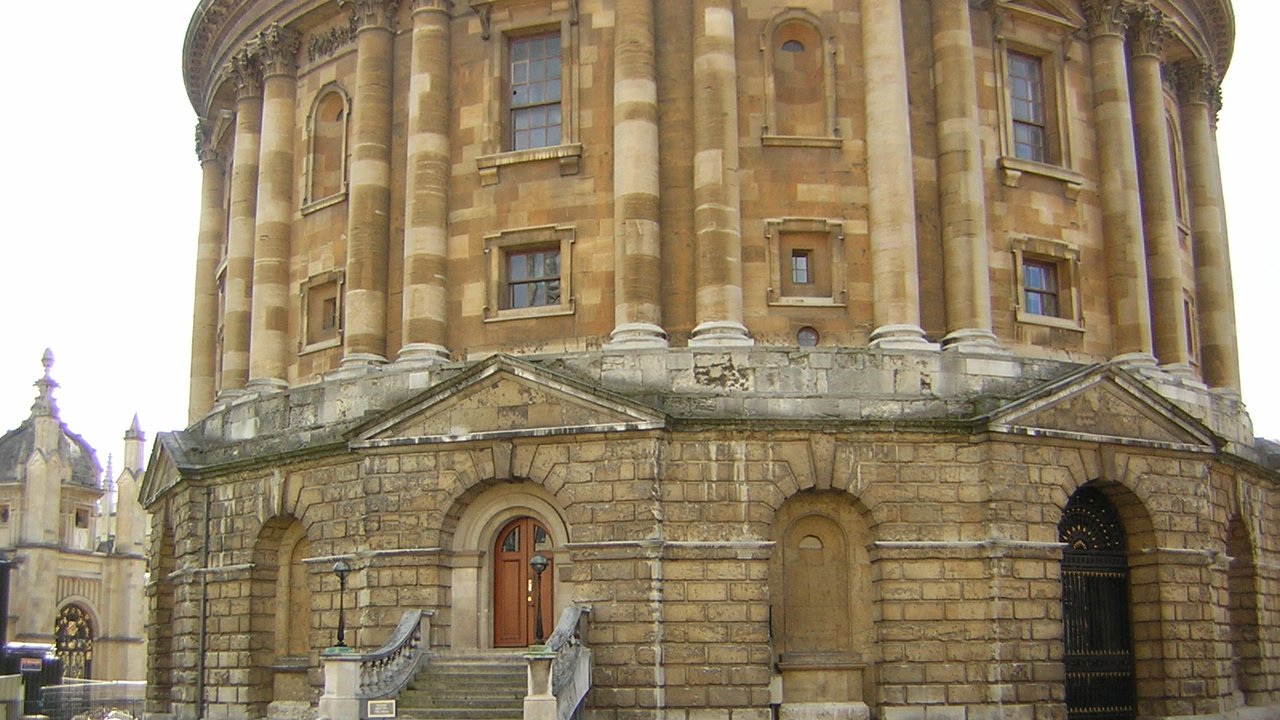
Image: "Radcliffe Camera, Oxford" by David Santaolalla, CC BY 2.0, via Wikimedia Commons. Cropped to fit.
#UKStudentVisa #StudyInUK #CAS #StudentVisa #StudyAbroad #LoyalInstituteForEducation #Ambala