The United States remains one of the most requested destinations for Indian travellers, and nearly everyone who goes for a holiday, family visit or short business trip travels on the same visa: the B-1/B-2 visitor visa. The process changed in important ways in late 2025 - most applicants now attend an in-person interview, and appointment waits at Indian posts run into months - so this guide puts the current rules in one place. Every figure below is from official US government pages, checked on 15 November 2026.
What the B-1/B-2 visa is for
Visitor visas are nonimmigrant visas for a temporary stay: the B-1 covers business activities such as meetings, conferences and contract negotiations, the B-2 covers tourism, holidays, visiting friends or relatives and medical treatment, and most applicants are issued the combined B-1/B-2. You cannot use a visitor visa to work, study for credit, take paid performances, or live in the US through repeated visits - and travel mainly to give birth in the US so the child gets citizenship (birth tourism) is expressly not permitted.
The fee: USD 185
The visa application fee (the MRV fee) for a B-1/B-2 is USD 185, non-refundable and non-transferable, whether or not the visa is issued. In India you can pay by NEFT, UPI, debit or credit card, or cash over the counter at DRUK Bank, Axis Bank and Citibank. The fee receipt is valid for 365 days from the date of issue - you must schedule your appointment within that window, though the appointment itself can fall later. Indian passport holders pay no additional visa issuance fee when the visa is approved.
One thing to watch: a USD 250 "visa integrity fee" became US law in July 2025, but as of 15 November 2026 it does not appear on the State Department's fee schedule or on the official India visa fee page, which both list only the USD 185 fee for B visas. Check the official fee page on the day you pay so you know exactly what is being charged.
What Indians usually get: 10 years, multiple entry
Under the US reciprocity schedule for India, B-1, B-2 and B-1/B-2 visas are issued with 120 months (10 years) of validity and multiple entries. That is the visa's validity - how long you can use it to travel to a US port of entry. How long you may stay on each visit is decided separately by the Customs and Border Protection officer when you arrive and is recorded on your I-94. A visa lets you travel to the border and request entry; it does not guarantee admission.
Interviews are the rule again
Since 1 October 2025, the State Department requires almost every nonimmigrant visa applicant - including children under 14 and applicants over 79 - to attend an in-person interview with a consular officer. The interview waiver survives only in narrow cases. For B-1/B-2 renewals you may qualify if you are renewing a full-validity B-1, B-2 or B-1/B-2 visa that is still current or expired within the last 12 months, you were at least 18 when it was issued, you apply in your country of nationality or residence, you have never been refused a visa (unless the refusal was overcome or waived), and you have no apparent ineligibility. Officers can still call anyone for an interview.
India-specific waiver points from the official US visa information site: you must be physically present in India during the process, you drop documents at one of eleven drop-off locations, and you should pick a submission appointment at least 15 calendar days before your 12-month renewal window closes. Interview waiver processing can take up to three weeks with no expediting, and eligibility does not guarantee issuance.
Current wait times at Indian posts
Interviews are conducted at five posts - the embassy in New Delhi and the consulates in Mumbai, Chennai, Hyderabad and Kolkata. The State Department's global wait time table (last updated 21 October 2026, updated monthly) shows these figures for B-1/B-2 applicants:
| Post | Average wait last month | Next available appointment |
|---|---|---|
| New Delhi | 7 months | 11 months |
| Mumbai | 12.5 months | 12 months |
| Chennai | 7.5 months | 7.5 months |
| Hyderabad | 10.5 months | 10.5 months |
| Kolkata | 8.5 months | 8.5 months |
The practical reading: apply many months before you plan to travel - the embassy's own advice is at least three months ahead, and current B-1/B-2 waits argue for much earlier. Posts release additional appointment slots regularly, so once you have booked, keep checking the scheduling system and move to an earlier slot when one opens. Average wait is measured from fee payment to interview date in the previous month and does not guarantee your own date.
How to apply from India, step by step
1. Complete the DS-160. Fill the online nonimmigrant visa application form (DS-160), upload a photo that meets the requirements, and print the confirmation page - you will need it at both appointments.
2. Create your profile and pay the fee. Register on the official visa appointment service (usvisascheduling.com), pay the USD 185 MRV fee by NEFT, UPI, card or cash, and keep the receipt.
3. Book two appointments. India runs a two-step system: a Visa Application Center (VAC) appointment for fingerprints and a digital photograph, and a consular interview at the embassy or consulate. The VAC appointment must be at least 2 business days before the interview. VACs operate in more cities than the five interview posts, which saves a trip. Family members with provable ties can book together using the dependent option.
4. Attend the interview. Carry your passport, DS-160 confirmation page, fee receipt and appointment letter. A consular officer will ask about your trip and your situation, and ink-free fingerprint scans are taken as part of the process. Some applications move to administrative processing after the interview - the officer will tell you if yours does.
5. Wait for the passport. If approved, processing typically takes seven to ten working days after the interview, though individual cases vary. Do not buy non-refundable tickets until the visa is in your hands.
What the officer is actually assessing
There is no official minimum bank balance for a US visitor visa - no government page publishes one. What the State Department says officers may look at is evidence of the purpose of your trip, your intent to depart the US after it, and your ability to pay all costs of the trip. Employment and family ties can be enough to show purpose and intent to return, and if you cannot cover all costs yourself you can show that someone else will. Note what does not count: a letter of invitation or Affidavit of Support is not required and is not one of the factors used to decide the visa - you qualify on your own ties, not on assurances from people in the US. Bring documents that back your situation - employment letter, leave approval, bank statements, itinerary - and answer questions consistently with your DS-160.
Documents checklist
- Passport - valid for at least six months beyond your period of stay in the US, unless exempt under country-specific agreements.
- DS-160 confirmation page - with the barcode.
- Fee receipt and appointment letters for the VAC and the interview.
- Photo - uploaded with the DS-160 (if the upload fails, carry one printed photo; 5cm x 5cm, white background, and eyeglasses are no longer allowed in new visa photos).
- Supporting evidence - purpose of trip, ties to India, and funds for the trip, as described above.
Sources
- US Department of State - Visitor Visa overview (what B-1/B-2 allows, documents, what officers assess, admission at the border): travel.state.gov/content/travel/en/us-visas/tourism-visit/visitor.html
- US Department of State - Fees for Visa Services (USD 185 fee for visitor visas): travel.state.gov - fees for visa services
- Official US visa information and appointment service for India - visa fees, payment options and 365-day validity: ustraveldocs.com/in/en/step-3, and appointment scheduling, VAC rule and processing time: ustraveldocs.com/in/en/step-4
- US Department of State - Interview Waiver Update, 18 September 2025 (in-person interviews for nearly all applicants from 1 October 2025, renewal waiver conditions): travel.state.gov - interview waiver update, and India interview waiver details (drop-off locations, three-week processing): ustraveldocs.com/in/en/renew-visa
- US Department of State - Visa reciprocity schedule for India (B visas: no issuance fee, multiple entries, 120-month validity): travel.state.gov - reciprocity schedule: India
- US Department of State - Global visa wait times table (updated 21 October 2026): travel.state.gov - global visa wait times
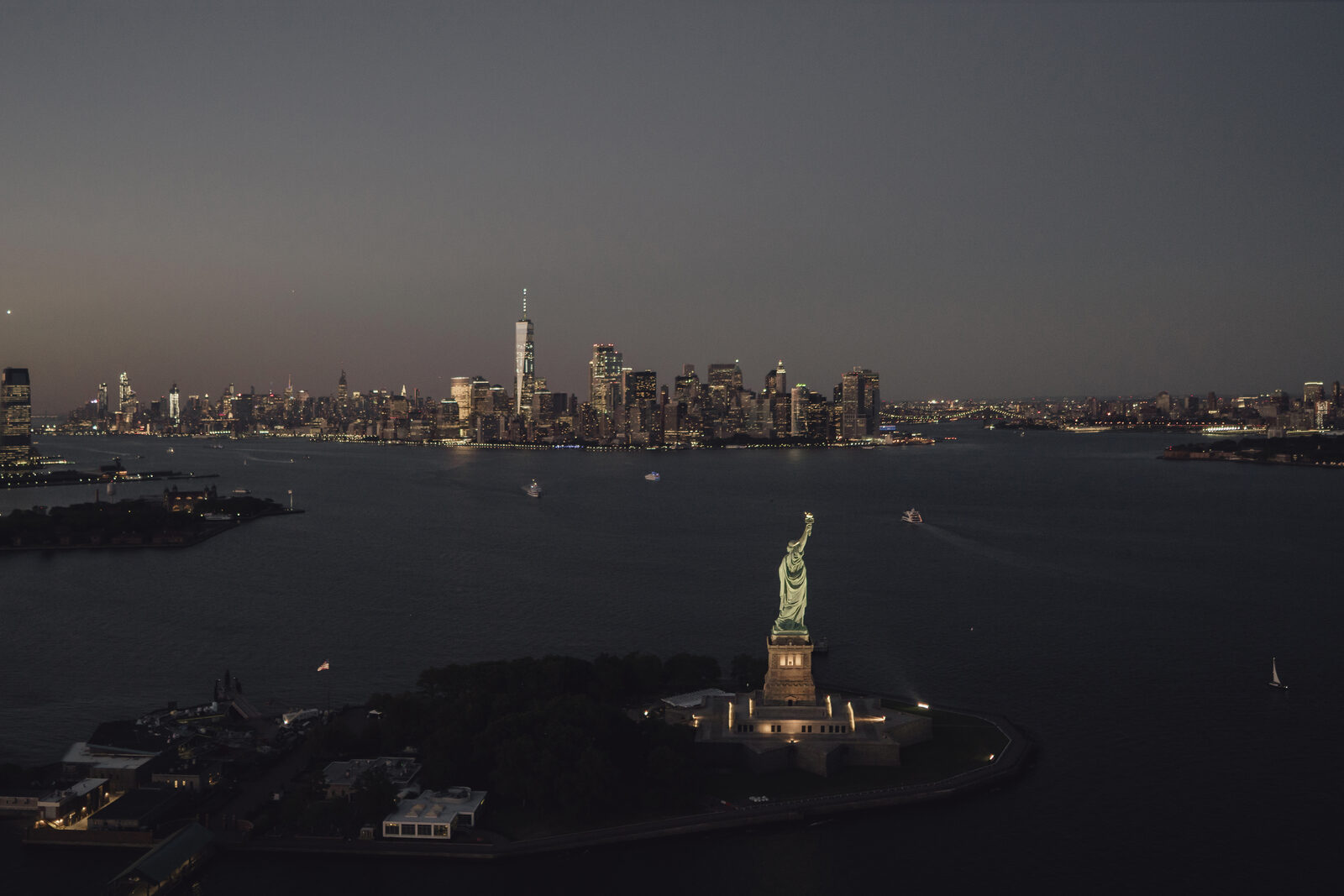
Image: "New York City skyline with Statue of Liberty at dusk aerial 2018" by SebastianBlumeArt, CC BY-SA 4.0, via Wikimedia Commons. Cropped to fit.
#USB1B2Visa #USVisitorVisa #USTouristVisa #USVisaIndia #LoyalInstituteForEducation #Ambala