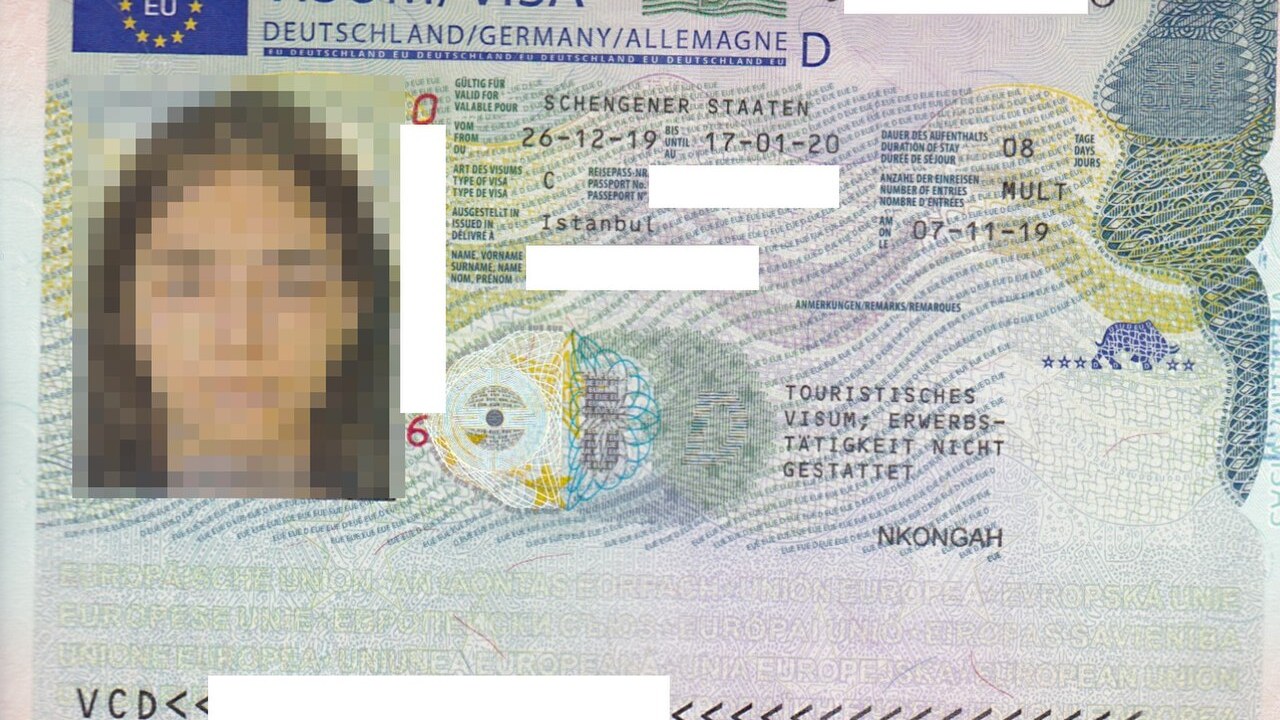
A Schengen tourist visa lets you stay up to 90 days in any 180-day period across the Schengen area - and the European Commission's own application guidance reads like a list of the ways people go wrong. Most refusals are not bad luck. They come from a handful of repeat mistakes: applying to the wrong consulate, applying too late, weak money proof, missing insurance, or no clear evidence you will come back. Here are the mistakes that matter, and the official rule behind each one.
1. Applying to the wrong consulate
You cannot simply pick the consulate with the earliest appointment or the friendliest reputation. The EU rule is exact:
- Visiting one country. Apply at that country's consulate.
- Visiting several countries. Apply at the consulate of the country where you will spend the longest time.
- Equal-length stays. Apply at the consulate of the first country you will enter.
An itinerary built backwards - flights and hotels arranged around one country, application lodged with another - is one of the easiest inconsistencies for an officer to spot.
2. Getting the timing wrong
- Applying too late. You must submit your application at least 15 days before your intended journey. Inside that window, a consulate can simply be unable to process in time.
- Applying too early. Applications open no earlier than 6 months before travel - earlier than that, the file will not be accepted.
- Assuming 15 days means 15 days. Normal processing is 15 days, but it can extend to up to 45 days when a more detailed examination or additional documents are needed. Booking non-refundable travel against the best case is a planning mistake, not a visa rule.
3. Passport and photo problems
- Passport expiring too soon. Your passport's expiry date should be at least 3 months after the date you leave the Schengen area - for a multiple-entry visa, 3 months after departure from the last country visited. A passport that falls short can end the application before it starts.
- A casual photo. The photo must meet ICAO standards - a selfie-style or edited photo invites a rejection at the counter.
- Skipping the biometrics step. Fingerprints are collected when you submit the application, so the in-person appointment is not optional (limited exemptions exist for specific categories).
4. Weak money and itinerary proof
The consulate must see supporting documents for the purpose of your stay, your financial means and your accommodation. Where applicants go wrong:
- Statements that do not match the trip. A three-week itinerary across four countries needs funds that visibly cover it - a thin or suddenly-inflated balance raises questions instead of answering them.
- No clear accommodation trail. Hotel bookings, a host's details, or both - the stay should be accounted for, night by night.
- A vague purpose. "Tourism" with no day plan, no bookings and no logic reads as a story still being written. Consistency across form, bookings and statements is what officers check.
5. Missing or wrong travel insurance
Medical insurance is a listed requirement, not a formality: it must cover emergency medical care, hospitalisation and repatriation (including in the event of death). A policy that excludes repatriation, covers only part of the trip, or starts after your arrival date fails the requirement. On cost, plan for the official visa fee of €90 for adults and €45 for children aged 6-12, plus any service-centre charge if you apply through one.
6. Not showing you will return
Every Schengen application must include evidence of your intention to return to your home country after your stay. This is where otherwise tidy files fall apart - no employment proof, no leave letter, nothing anchoring the applicant at home. We covered exactly how officers judge this in our guide to home-country ties, and the wider refusal patterns in our rejection reasons post. The short version: your job, home, finances and family should all tell the same story - that coming back is the plan, not an afterthought.
7. Treating 90 days as a per-country allowance
The limit is 90 days in any 180-day period across the whole Schengen area, not per country - and overstays are no longer something only a sharp-eyed border guard would catch. The new Entry/Exit System (EES) records the entries and exits of non-EU travellers electronically, replacing passport stamps, and the EU provides an official short-stay calculator to check your remaining days. A past overstay or a pattern of long back-to-back visits is exactly the kind of record that turns a simple tourist application into a refusal.
If your application is refused
A Schengen refusal comes with the reason in writing and information on how to submit an appeal - read the stated reason first, because it tells you which mistake the consulate found. A new application that repeats the same file usually meets the same outcome; what changes the result is fixing the specific weakness the refusal named. For anything beyond a straightforward reapplication, consider advice from a licensed immigration consultant or lawyer who can look at your actual file.
This post is for general information. It is checked against the official sources below on 10 November 2026, but visa rules change - always confirm the current requirements on the official sources, and consider advice from a licensed immigration consultant or lawyer for your specific case, before you apply.
Official sources
- European Commission - Applying for a Schengen visa (where and when to apply, required documents, fees, processing times, refusals and appeals): home-affairs.ec.europa.eu
- European Union - Entry/Exit System (EES) and the official short-stay calculator (electronic entry/exit records, 90/180-day checks): travel-europe.europa.eu
Image: "German Tourist Visa (2019)" by Aveaoz, CC BY-SA 4.0, via Wikimedia Commons.
#SchengenVisa #SchengenTouristVisa #VisaRefusal #TouristVisa #EuropeTravel #LoyalInstituteForEducation #Ambala